CHAMPIONS OF HUMAN RIGHTS
- Dec 18, 2025
- 5 min read
Mahatma Gandhi (1869-1948)
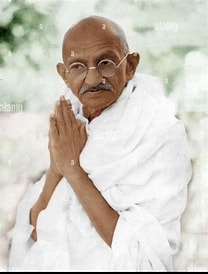
Gandhi pioneered and practiced resistance to tyranny through mass nonviolent civil disobedience. While leading nationwide campaigns to ease poverty, expand women’s rights, build religious and ethnic harmony and eliminate the injustices of the caste system, Gandhi supremely applied the principles of nonviolent civil disobedience to free India from foreign domination.
Eleanor Roosevelt (1884-1962)

As chair of the United Nations Human Rights Commission, Eleanor Roosevelt was the driving force in creating the 1948 charter of liberties which will always be her legacy. The Universal Declaration of Human Rights. The legacy of her words and her work appears in the constitutions of scores of nations and in an evolving body of international law that now protects the rights of men and women across the world. “Do what you feel in your heart to be right – for you’ll be criticized anyway. You’ll be damned if you do, and damned if you don’t.”
Cesar Chavez (1927-1983)
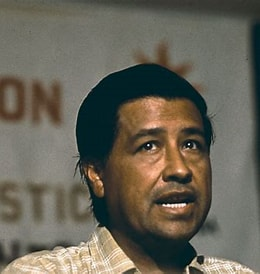
Mexican-American farmworker, labor leader, and civil rights activist Cesar Chavez brought about better conditions for agricultural workers. Chavez changed that when he dedicated his life to winning recognition for the rights of agricultural workers, inspiring and organizing them into the National Farm Workers Association, which later became the United Farm Workers. Through marches, strikes and boycotts, Chavez forced employers to pay adequate wages and provide other benefits, and he was responsible for legislation enacting the first Bill of Rights for agricultural workers.
Nelson Mandela (1918-2013)

One of the most recognizable human rights symbols of the twentieth century. Mandela’s dedication to the liberties of his people inspires human rights advocates throughout the world. On trial for his actions, Mandela declared, “I have fought against white domination, and I have fought against black domination. I have cherished the ideal of a democratic and free society in which all persons live together in harmony and with equal opportunities. It is an ideal which I hope to live for and achieve. But if it need be, it is an ideal for which I am prepared to die.”
Martin Luther King, Jr. (1929-1968)

Martin Luther King, Jr. was one of the twentieth century’s best-known advocates for nonviolent social change. Dr King wrote, spoke, and organized nonviolent protests and mass demonstrations to draw attention to racial discrimination and to demand civil rights legislation to protect the rights of African-Americans. Subsequent mass demonstrations in many communities culminated in a march that attracted more than 250,000 protestors to Washington, D.C., where Dr King delivered his famous “I have a dream” speech in which he envisioned a world where people were no longer divided by race. So powerful was the movement King inspired, Congress enacted the Civil Rights Act of 1964, the same year he was honored with the Nobel Peace Prize. Posthumously, Dr. King was awarded the Presidential Medal of Freedom. King is an icon of the civil rights movement. His life and work symbolize the quest for equality and nondiscrimination that lies at the heart of the American–and human–dream.
Desmond Tutu (1931-2021)

Desmond Tutu is one of South Africa’s most well-known human rights activists winning the Nobel Peace Prize for his efforts in resolving and ending apartheid. Through his lectures and writings as an outspoken critic of apartheid, he was known as the “voice” of voiceless black South Africans. In his human rights work, Tutu formulated his objective as a “democratic and just society without racial divisions” and set forth minimum demands for the accomplishment of this, including equal civil rights for all, a common system of education and the cessation of forced deportation. During his lifetime, Desmond Tutu championed human rights and the equality of all people, both within South Africa and internationally.
Oscar Arias Sanchez (b. 1940)

Oscar Arias Sanchez won the respect of leaders and humanitarians everywhere by bringing peace to Central America. Elected President of Costa Rica in 1986, Arias Sanchez immediately put the world on notice that he intended to restore peace in Central America by disentangling the region from the Cold War between the United States and the Soviet Union. In a series of meetings with the presidents of Guatemala, El Salvador, Honduras, and Nicaragua, President Arias Sanchez pressed to resolve the turmoil and end outside influence in Central America. He eventually gained approval of his peace plan, which called for each country to limit the size of their armies, assure freedom of the press, and hold free and open elections. The plan was successful and, with the signing of the accords, fighting in the region came to an end.
In 1987, President Oscar Arias Sanchez received the Nobel Peace Prize for bringing peace to the region. During his presidency, he frequently ventured into the public without entourage or fanfare to listen to the concerns of the citizenry. At the conclusion of his first term in office, he continued to be a “man of the people” promoting human security and development on many fronts. In 2006, he was again elected President of Costa Rica and continued to champion for peace and human rights.
Muhammad Yunus (b. 1940)

Economist and Nobel Laureate Muhammad Yunus has become internationally renowned for his revolutionary system of micro-credit – the extensions of small loans to entrepreneurs to poor to qualify for traditional bank loans – that has helped many escape poverty. He realized that by means of tiny loans and financial services, he could help the poor free themselves from poverty. In 1983, he established the Grameen Bank (Village Bank), founded on his conviction that credit is a fundamental human right. In a quarter of a century, the bank has stood as the flagship of a 100-country network of similar institutions enabling millions to escape poverty through individual economic empowerment. Professor Yunus is a member of the board of the United Nations Foundation and the recipient of numerous international awards for his humanitarian endeavors.
Jose Ramos-Horta (b. 1949)

President of Timor-Leste and Nobel Peace Prize Laureate Jose Ramos-Horta has spent most of his adult life fighting for freedom from oppression in his homeland. At 18, Ramos-Horta was exiled from Timor-Leste for his outspoken criticism of the government’s failure to deal with underdevelopment and widespread poverty. He later returned briefly to Timor-Leste but was exiled once again from 1970 to 1971 for speaking out against Portuguese military rule. He became the youngest person to address the United Nations and convinced UN representatives to pass a resolution supporting independence of Timor-Leste. Despite this victory, Indonesia continued its occupation, and so he persisted in urging the UN and other world leaders to convince Indonesia to grant Timor-Leste its freedom. In 1996, along with his countryman, Bishop Ximanes Belo, Ramos-Horta was awarded the Nobel Peace Prize. Largely through Ramos-Horta’s efforts, in 2002 Timor-Leste ultimately won its independence, and in 2006 he was appointed the Prime Minister of Timor-Leste and then elected its President in 2007.
Comments